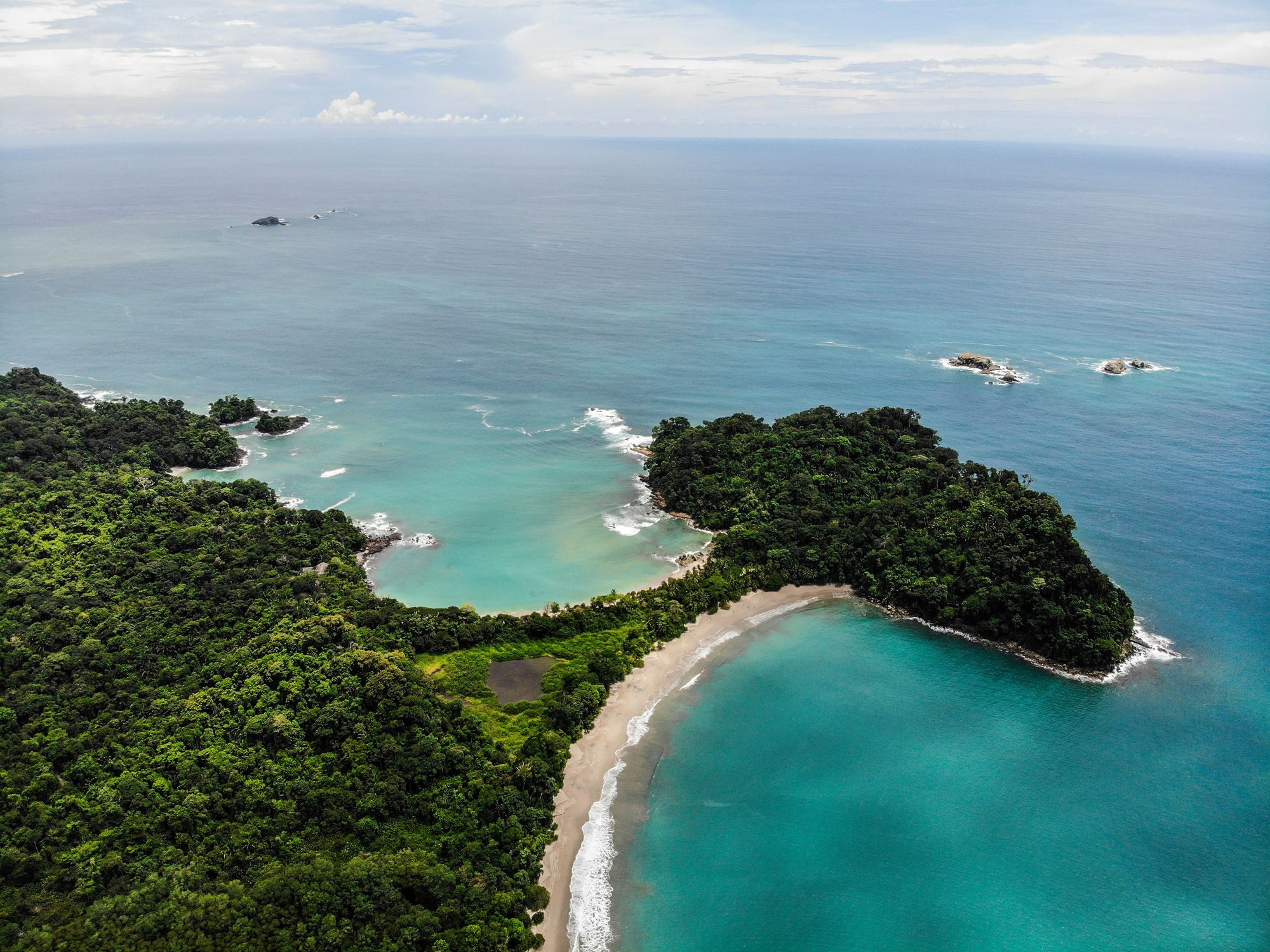
Manuel Antonio, Costa Rica
By Aaron Bailey · Last updated
Manuel Antonio is home to one of Costa Rica's most visited national parks, where pristine white-sand beaches meet lush rainforest. Spot monkeys, sloths, and colorful birds while enjoying some of the most beautiful coastal scenery in Central America.
Aaron's Notes
The national park here is magical. Inside, walk through the jungle on your way to my favorite beach in all of Costa Rica while seeing sloths, monkeys, and other wildlife.
Top attractions & tours
Some tour links below are affiliate links — if you book through them, Route Pura Vida earns a small commission at no extra cost to you.
Manuel Antonio National Park is the headline attraction and one of the most biodiverse patches of real estate in the country: two-toed and three-toed sloths, white-faced capuchins, squirrel monkeys, iguanas, and seasonal humpback whales all in an area you can cover in half a day. A certified guide is well worth the extra $25.
The park's main beaches — Playa Manuel Antonio and Playa Espadilla Sur — are calm, swimmable, and walled by jungle. Outside the park, Playa Biesanz is a hidden cove good for snorkeling when seas are calm.
From Quepos marina you can book mangrove tours, sportfishing, and catamaran trips. Rainmaker Park, inland about 20 minutes, has hanging bridges and waterfalls and is a less-crowded alternative for canopy viewing.
Local picks
El Avión, a converted 1954 cargo plane bolted to the cliff, is the sunset view restaurant. Café Milagro does excellent coffee, breakfast, and live music some nights. Barba Roja is the classic sunset spot and has been run by the same family for decades.
For Tico food at honest prices, detour into Quepos (the main town five minutes north). Sodas around the market serve casados under $10; El Gran Escape is the longtime sport-fishermen's restaurant by the marina.
If you want to swim away from the crowds, ask any driver to drop you at Playa Biesanz or Playa La Macha. Both are short jungle walks from the road and much quieter than the park beaches.
Weather & climate
Manuel Antonio is hot, humid, and tropical year-round. Daytime highs run in the high 80s°F; lows seldom dip below 72°F. Humidity stays high through every season.
The dry season (December–April) delivers reliable sunshine and the busiest park crowds. February is the single driest month.
May through November is the green season. Mornings are typically clear and afternoons see heavy thunderstorms — ideal for sloth-spotting early, then retreating to a pool. September and October are the wettest.
Monthly climate
Safety considerations
Manuel Antonio has the highest concentration of tourists in Costa Rica per square kilometer, and petty theft on the beaches is the single most common complaint. Never leave bags unattended, even for a quick swim — capuchin monkeys will also steal food and phones.
Rip currents are a real risk on Playa Espadilla (the public beach outside the park). The park's inner beaches are much calmer. Road traffic on the single highway between Quepos and the park is heavy; take care walking the shoulders at night.
Getting around
A public bus runs every 20–30 minutes between Quepos, the hotels along the hill, and the park entrance for about $1 — it's one of the easiest public-transit setups in any Costa Rican beach town.
Uber works in Manuel Antonio but availability thins at night and during rain. Taxis are easy to find along the main road. A rental car is useful for day trips to Dominical, Nauyaca Falls, or Uvita but not essential if you're staying in the main corridor.
When to visit
Mid-December through April is peak: clear skies, dry trails, and heaviest crowds. Arrive at the park gate before it opens (7 am) to beat tour-bus arrivals and catch animals at their most active.
Late November or early May gives you most of the good weather at meaningfully lower prices. Humpback whale sightings from Uvita/Marino Ballena are best July–October and December–March.