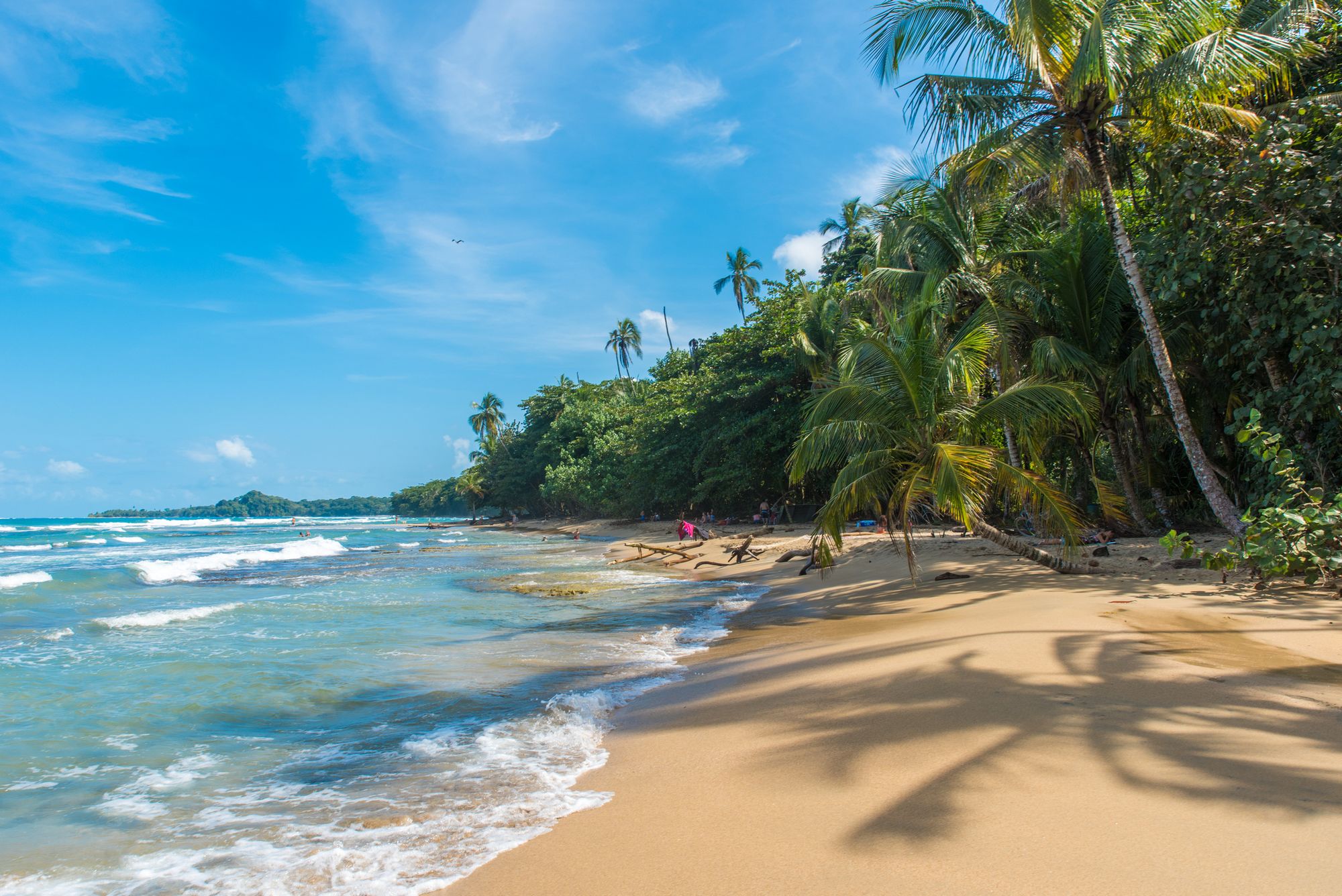
Puerto Viejo, Costa Rica
By Aaron Bailey · Last updated
Puerto Viejo de Talamanca is a laid-back Caribbean paradise known for its stunning beaches, and Afro-Caribbean culture. Enjoy world-class surf at Salsa Brava, explore nearby Cahuita National Park, and savor delicious Caribbean cuisine.
Top attractions & tours
Some tour links below are affiliate links — if you book through them, Route Pura Vida earns a small commission at no extra cost to you.
Salsa Brava, the heavy reef break in front of town, is Costa Rica's most famous and dangerous wave — experienced surfers only. For beginners, Playa Cocles a few kilometers south has a softer beach break and is where most schools teach.
Ride a bike south along the coast road and you pass Playa Chiquita, Punta Uva (the most beautiful swimming cove in the area), and end at Manzanillo, a tiny village backed by the Gandoca-Manzanillo Wildlife Refuge.
To the north, Cahuita National Park has one of the Caribbean coast's healthiest reefs and an easy 8 km coastal trail with howler monkeys, sloths, and coatis. The Jaguar Rescue Center on the road to Cocles is a must for animal lovers, with free-flying sloths during morning tours.
Local picks
Puerto Viejo's food is distinctly different from the rest of Costa Rica — coconut-milk rice and beans, pati pastries, jerk-style chicken, and fresh seafood with Caribbean spice. Stashu's con Fusion, Bread & Chocolate, and Koki Beach are perennial favorites.
Cocles and Playa Chiquita have become their own mini scenes with beachfront yoga, healthy cafés, and sunset cocktail bars — Seaside, La Nena, and Playa Chiquita Lodge are good starting points.
For nightlife, Salsa Brava and Tasty Waves Cantina both draw a mixed crowd of travelers and locals. Sundays at Johnny's Place are an institution. Music is reggae-heavy and nights run long.
Weather & climate
The Caribbean coast has a very different weather pattern from the rest of Costa Rica. It's hot and humid year-round, with highs in the mid to high 80s°F and ocean temps near 82°F.
Instead of a clean dry-versus-wet split, rain can fall any month. The relatively drier windows are September–October and February–March — exactly when the Pacific coast is rainiest or driest, which makes Puerto Viejo a great contrarian choice.
Heavy rain falls especially in December, January, and July. Even in wetter months, mornings are often clear and storms blow through fast.
Monthly climate
Safety considerations
Puerto Viejo's vibe is friendly and the town is small, but beach-bag theft is a persistent problem — never leave belongings unattended on Cocles or Punta Uva. Walk with a group after dark on the dirt roads between beaches.
Rip currents and shore-break can be strong, especially at Playa Cocles. Snorkeling at Cahuita and Punta Uva is best when seas are calm. If you rent a bike or scooter, skip night riding — the coast road is unlit and full of wildlife.
Getting around
The coast road from Puerto Viejo to Manzanillo is flat, scenic, and about 13 km — a bicycle is the single best way to explore. Every other business in town rents bikes for $5–10 a day.
Uber does not operate reliably on the Caribbean coast. Local taxis (usually silver station wagons) run fixed routes from the town center to Cocles, Punta Uva, and Manzanillo. For San José or SJO, direct shared shuttles take about 4.5 hours.
When to visit
September and October are secretly the best months here — driest on the Caribbean coast while the rest of the country is underwater. February and early March are the other reliably sunny window.
December and January bring heavy rains and occasional road closures on the single highway from San José. Come anyway if you want the quiet, rooty, low-season feel — just build buffer days into your plans.