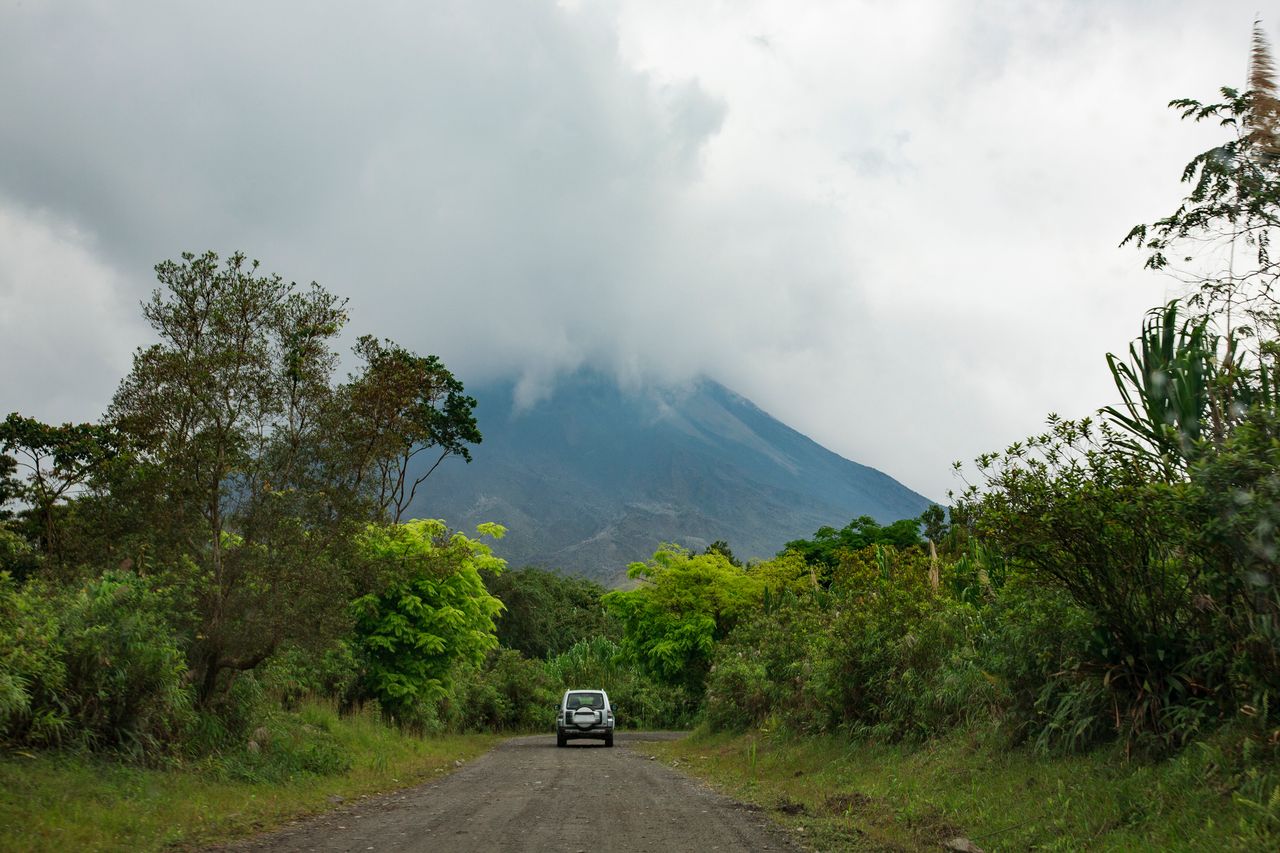
Driving in Costa Rica: What to Expect on the Road
A Local's Guide to Road Conditions, Safety Tips, and What to Expect Behind the Wheel
By Aaron Bailey · Published
So you’ve decided to rent a car in Costa Rica—excellent choice! Now it’s time to talk about what it’s actually like to drive in this beautiful country. Costa Rican roads offer everything from smooth highways to adventurous river crossings, and knowing what to expect will help you navigate with confidence.
Road Conditions: The Good, the Bad, and the Muddy
Costa Rica’s road network is a study in contrasts. You’ll find well-maintained highways connecting major cities alongside challenging dirt tracks leading to remote beaches and mountain villages.
Paved Highways like Route 1 (the Interamericana) and Route 27 (San José to the Pacific coast) are generally in good condition with clear signage and regular maintenance. These main arterials make traveling between major destinations relatively straightforward.
Secondary Roads tell a different story. Even paved secondary routes can feature significant potholes, uneven surfaces, and sections where pavement simply disappears. What looks like a short distance on a map might take much longer than expected due to road conditions.
Dirt and Gravel Roads are common in rural areas and lead to many of the country’s most beautiful destinations. During dry season (December through April), these are usually manageable with caution. During rainy season (May through November), some become nearly impassable without 4x4 vehicles as mud, ruts, and seasonal flooding create serious challenges.
River Crossings are real. In some remote areas, especially on the Osa Peninsula and parts of Guanacaste, you’ll encounter rivers flowing directly across roads. These are usually passable during dry season but can become dangerous during heavy rains. Always assess water depth and current before crossing, and watch how locals navigate first if possible.
The Infamous Costa Rican Speed Bumps
Meet the “muerto” (literally “dead man”)—Costa Rica’s speed bump. These can appear anywhere, often without warning signs or paint. You’ll find them on highways, in towns, approaching bridges, and seemingly in the middle of nowhere.
Some are gentle; others are tall enough to scrape your undercarriage if you don’t slow to a crawl. Locals know where they are and brake accordingly, but visitors often discover them the hard way. Watch for brake lights ahead and look for slightly discolored patches across the road.
Navigation Challenges
GPS has improved dramatically in Costa Rica, but it’s not foolproof. Apps like Waze and Google Maps work reasonably well in populated areas but can lead you astray in remote regions. Sometimes they’ll route you down “roads” that are actually footpaths or private driveways.
Street addresses barely exist outside major cities. Directions are often given using landmarks: “200 meters north of the red church” or “across from the old fig tree.” This charming system can be frustrating when you’re trying to find your hotel after dark.
Download offline maps before heading to remote areas. Cell service can be spotty, and you don’t want to lose navigation when you need it most. Physical maps are still valuable backups.
Road signs can be inconsistent. You might see excellent signage on one highway and almost nothing on another. Destinations aren’t always clearly marked at intersections, so having multiple navigation methods helps.
Traffic and Driving Culture
San José and urban areas feature aggressive driving, heavy traffic during rush hours (7-9 AM and 4-7 PM), and chaotic intersections. Motorcycles weave through traffic, pedestrians cross anywhere, and the pace is frenetic. Stay alert and defensive.
Rural highways present different challenges. Drivers often go slowly around curves (good) but may pass on blind corners (bad). Trucks and buses travel at their own pace, and passing opportunities can be limited on winding mountain roads.
Lane discipline is more of a suggestion than a rule. Vehicles may occupy any part of the road, especially motorcycles and bikes. Be prepared for vehicles to stop suddenly or pull onto the shoulder without warning.
Turn signals are used creatively. A left turn signal might mean “I’m turning left,” “don’t pass me,” or “it’s safe for you to pass.” Context matters, so exercise caution.
Common Road Hazards
Animals are everywhere. Cows, horses, dogs, iguanas, sloths, and even crocodiles can appear on roadways. Rural routes often have unfenced livestock that wander freely. Slow down when you see animals near the road, and be especially careful at dawn and dusk.
Potholes range from annoying to axle-breaking. Some are deep enough to cause serious damage. Watch vehicles ahead to see how they navigate, and don’t be afraid to slow down or even stop to assess a particularly bad section.
Landslides and flooding occur during rainy season, especially in mountainous areas. Roads can become partially blocked or completely closed. Check road conditions before traveling during heavy rains, and never try to drive through deep standing water—you can’t tell how deep it really is.
Unmarked construction zones appear suddenly. You might round a corner to find half the road torn up with minimal signage. Workers may flag you through, or you might need to navigate around obstacles yourself.
Police Stops and Traffic Laws
Traffic police are common, especially near tourist areas and on major routes. Stops are routine and usually professional. Officers check for valid licenses, rental documentation, insurance papers, and safety equipment (spare tire, warning triangle, jack).
Always carry:
- Your driver’s license
- Passport
- Rental agreement showing you’re an authorized driver
- Insurance documentation
Speed limits are typically 80-100 km/h on highways, 60 km/h on secondary roads, and 40 km/h in towns (unless posted otherwise). Radar traps are common, though officers also estimate speeds visually.
Seat belts are mandatory for all passengers. Using a mobile phone while driving is illegal unless hands-free. Don’t drink and drive—Costa Rica has zero tolerance with serious penalties.
If stopped, be polite and cooperative. Officers may write tickets but won’t demand on-the-spot payment. Be wary of anyone asking for immediate cash payments, as this isn’t standard procedure.
Parking and Security
Paid parking attendants (sometimes unofficial) appear near tourist attractions and in cities. They’ll often offer to “watch” your car for a few hundred colones. This informal system is part of local culture—small tips help ensure your vehicle isn’t damaged.
Never leave valuables visible in your car, even in “safe” areas. Rental cars are easily identifiable, making them targets. Use hotel parking when possible, and remove all bags, electronics, and loose items from view.
Parking lots at beaches and trailheads can have break-in issues. Use guarded lots when available, and seriously consider leaving nothing in the car—not even a towel or empty bag that might suggest valuables inside.
Fuel and Service Stations
Gas stations are plentiful in populated areas but sparse in remote regions. Fill up when you can, especially before heading to places like Monteverde, the Osa Peninsula, or the Caribbean coast.
Most stations are full-service—attendants pump your gas. Credit cards are widely accepted, though some remote stations may be cash-only. Prices are government-regulated and similar across the country.
Check your fuel level regularly. It’s easy to misjudge distances and consumption on slow, winding roads that eat through gas faster than highway driving.
Night Driving: Generally Not Recommended
Avoid driving after dark when possible. Limited street lighting, unmarked hazards, potholes you can’t see, and increased animal activity make night driving significantly more dangerous. Rural roads are especially treacherous after sunset.
If you must drive at night, reduce speed substantially, use high beams when appropriate (but dim for oncoming traffic), and stay extra alert for animals and road hazards.
Rainy Season Considerations
Driving during rainy season (May through November) requires extra caution. Afternoon downpours can reduce visibility to near-zero. Heavy rains make dirt roads slippery and can cause sudden flooding.
If caught in heavy rain:
- Slow down significantly
- Increase following distance
- Pull over if visibility becomes too poor
- Never attempt to cross flooded areas—water levels can rise rapidly
Final Thoughts
Driving in Costa Rica is an adventure in itself. Yes, the roads can be challenging, and yes, you’ll encounter situations that wouldn’t fly in other countries. But with patience, caution, and the right attitude, navigating Costa Rica independently is entirely manageable and deeply rewarding.
Take your time, embrace the unexpected, and remember that getting there is part of the journey. Before you know it, you’ll be navigating like a local—except maybe still hitting those surprise speed bumps a bit too fast.
For more information on getting started, check out our guide on how to rent a car in Costa Rica.
Pura vida and safe travels!

About the Author
Aaron Bailey
Hey, I'm Aaron and I've been living in Costa Rica 5 years and visiting much longer than that. I've traveled all over this country by car, plane and shuttle and I'm here to help you plan the best trip to Costa Rica.
Read more about Aaron