Arenal Volcano National Park, Costa Rica
By Aaron Bailey · Last updated
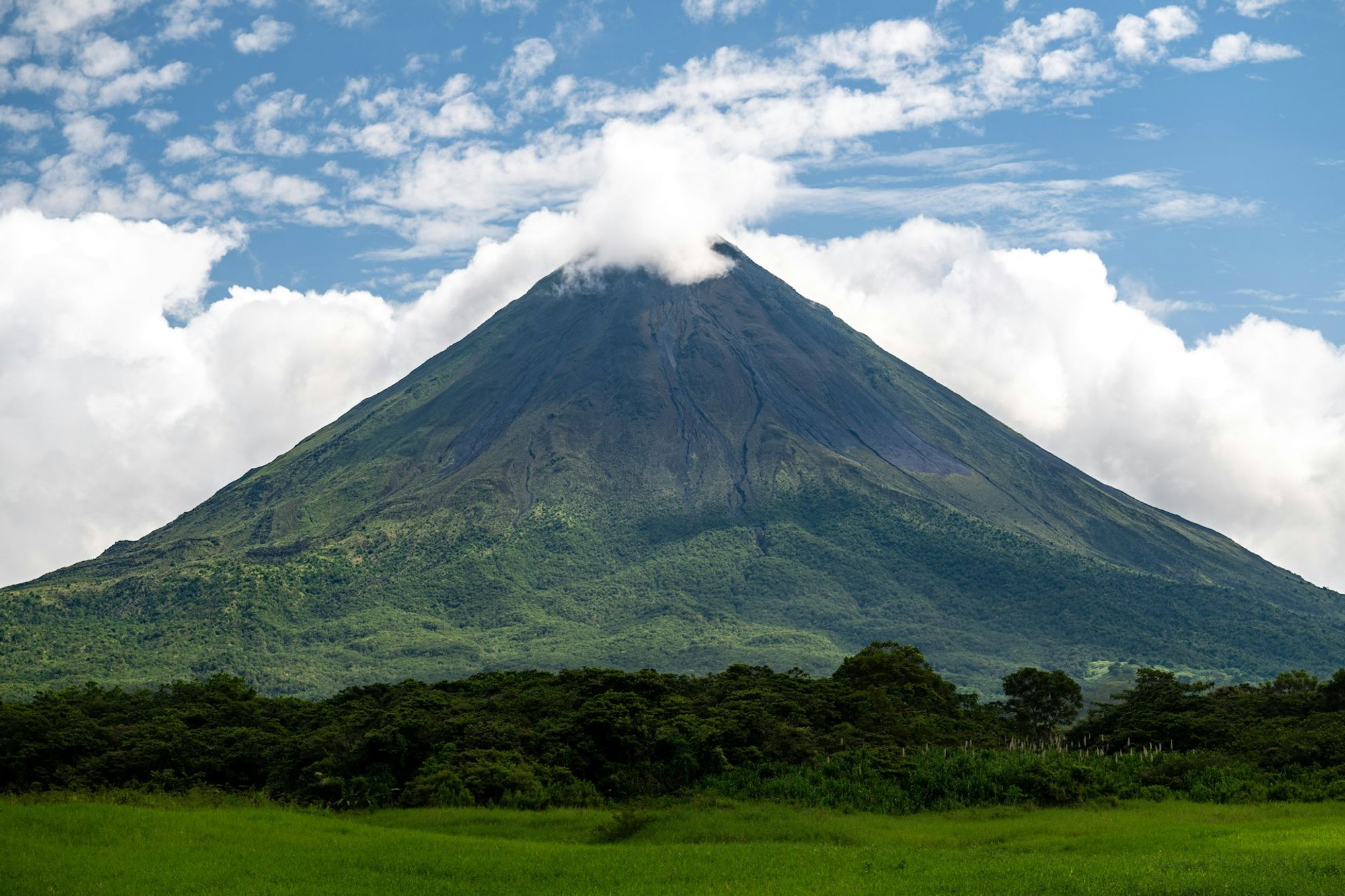
Arenal Volcano National Park surrounds Costa Rica's iconic near-perfect cone, with trails through 1968 lava fields, primary rainforest, and lakeshore at the foot of a volcano that erupted continuously for four decades.
Top attractions & tours
The park's signature hike is the Sendero Las Coladas — the "flows trail" — a roughly 2 km route through the hardened lava field left by the 1992 eruption, ending at a rocky scramble with the cone hanging directly overhead on clear mornings. The shorter Sendero Los Heliconias connects the visitor center to the Coladas trailhead and is the easiest wildlife loop, with the El Ceibo trail circling a massive ceiba tree.
Arenal Volcano itself rises 1,633 m (5,358 ft) above the rainforest in a nearly symmetrical cone. It erupted spectacularly from 1968 until 2010 and has been quiet since, though geologists still describe it as dormant rather than extinct. Climbing the cone is prohibited; the best ground-level views are from the Coladas trail and the Peninsula sector overlooking Lake Arenal.
Just outside the park boundary, the privately managed Mirador El Silencio reserve has its own 3.5 km trail through old-growth forest onto lava flows, often with fewer people than the main SINAC sector. Mistico Hanging Bridges, a few kilometers further west, threads six suspended walkways at canopy level through 250 hectares of rainforest — the easiest way to see treetop wildlife around Arenal.
Local picks
The Arenal Observatory Lodge is the only hotel inside the national park, a former volcanology research station with its own private trail network, a frog pond, and unobstructed cone views from the rooms. The on-site restaurant is open to non-guests and is the closest reliable lunch stop to the trailheads.
For dinner back in La Fortuna town, about 30–40 minutes away, Don Rufino is the long-running special-occasion spot for Costa Rican steaks and fish. Organico Fortuna does creative vegetarian and fresh juices, and Soda La Parada on the central park is open 24/7 for cheap casados between hikes.
Hot springs are the standard post-hike move. Tabacón has the most natural setting — a thermal river warmed by the volcano — while Baldí and Paradise are bigger pool complexes with slides. El Chollín, off a gravel road, is the free locals' option in the same thermal river system; bring water shoes.
Weather & climate
The park sits on the windward side of the continental divide at roughly 1,100–1,600 feet, which means warm, humid, and a real chance of rain on any day of the year. Daytime highs run in the low 80s°F and nights cool to the high 60s.
Drier months are February through April, when mornings are most likely to be clear enough to see the cone. Cloud cover is the biggest visibility factor — even in dry season the volcano often has its head in the clouds by mid-morning.
From May through November, expect rain almost daily, often heavy. The rainforest is at its lushest and waterfalls run hardest. September and October trend toward fewer afternoon storms than the June–August peak, so they can actually be decent windows.
Monthly climate
Safety considerations
Climbing the volcano cone is prohibited and dangerous — loose scree, gas vents, and the genuine possibility of future activity. Stay on marked SINAC trails; off-trail hiking is not permitted in either sector. Lava-field rocks are sharp and uneven, so wear actual hiking shoes, not flip-flops, and bring water and rain gear regardless of forecast.
Snake encounters (including fer-de-lance) are rare but possible in dense forest sections — watch where you put your hands and feet, especially around the El Ceibo trail. The drive in from San José or Monteverde involves winding mountain roads that fog after dark; do it in daylight whenever possible.
Getting around
The park has two main access points: the main visitor center / Las Coladas sector off Route 142 west of La Fortuna (open daily, last entry around 4pm) and the Peninsula sector further along the lake. Tickets run about $15 plus tax for foreign adults and are sold at each ranger station — credit card only, no cash. Each ticket is for one sector, one day.
There's no public bus to the trailheads. From La Fortuna town it's a 30–40 minute drive; most visitors come via rental car, a half-day tour from town, or a private shuttle. Inside the park you're on foot — trails are well-marked but rangers don't guide, so book a naturalist guide separately if you want one.
When to visit
February and March are the best statistical bet for clear morning views of the cone and dry footing on the lava trails. They're also peak season alongside Christmas and Easter, so book ahead. Aim to be on the trail between 6am and 9am, before clouds usually build.
November and May are the shoulder months I'd target for a balance of decent weather, fewer crowds, and softer pricing. The forest is greener, waterfalls run harder, and you can usually still catch one clear volcano morning. Just bring real rain gear — a cheap poncho will not cut it.