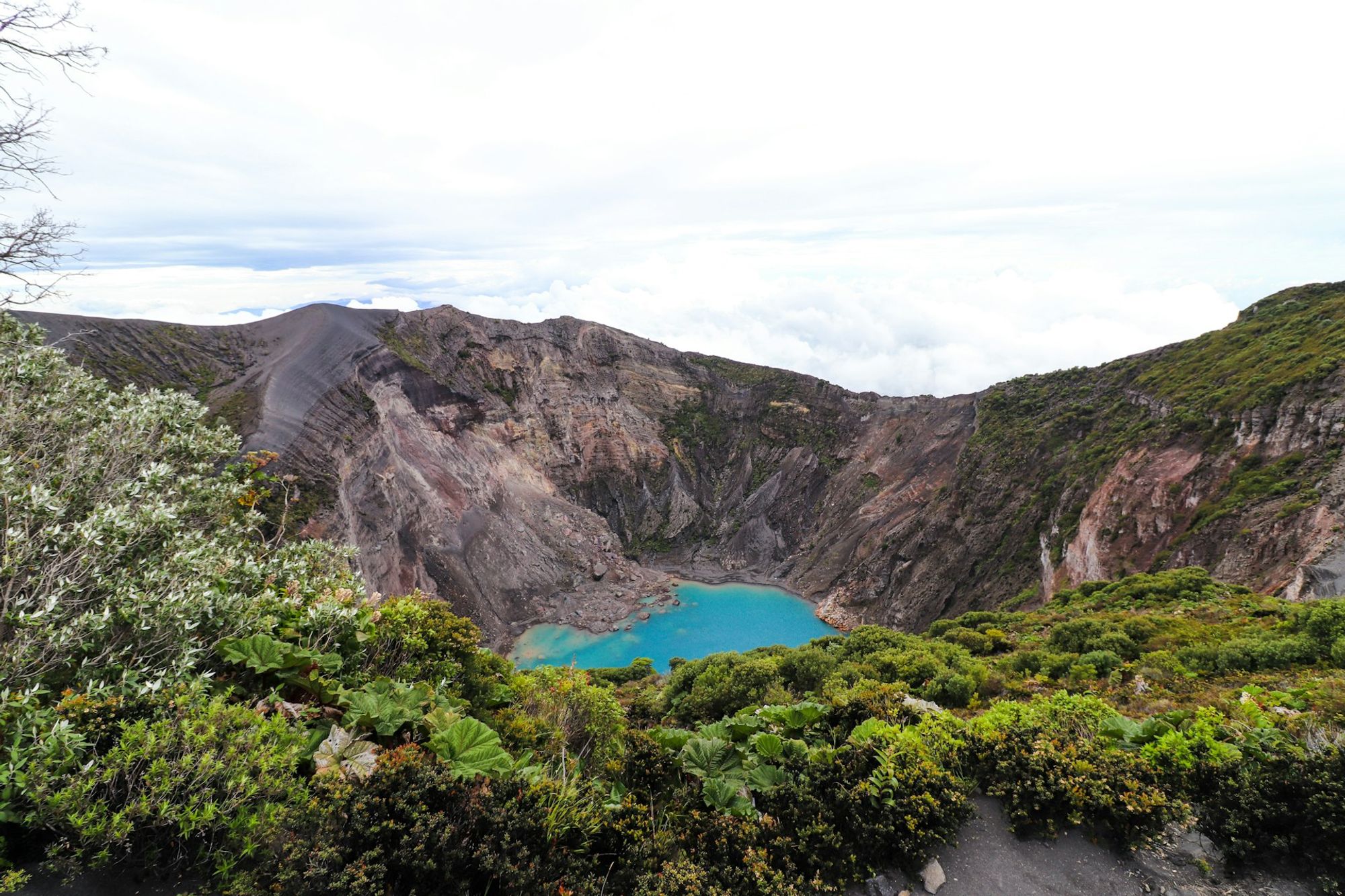
Irazú Volcano National Park, Costa Rica
By Aaron Bailey · Last updated
Irazú is Costa Rica's tallest volcano at 3,432 m, with a lunar summit, a turquoise crater lake, and views of both oceans on the rare clear morning. It's the easiest high-altitude day trip from San José.
Top attractions & tours
The main crater is a near-perfect 1 km bowl with a shifting turquoise-green acid lake at the bottom — water level rises and falls dramatically year to year. A short paved path from the parking lot drops you right at the rim; on a clear morning you can also peer into the adjacent Diego de la Haya crater, a deep symmetrical cone named for the 17th-century Spanish governor.
Above the craters, the landscape goes full lunar — black volcanic sand, scrubby vegetation, and Costa Rica's highest paved road. From the upper viewpoint, on a genuinely clear morning, you can see both the Pacific and Caribbean — a sight most visitors never get because the clouds usually beat them to it. Sunrise tours are the way to maximize your odds.
The park's lesser-known Prusia sector is a separate entrance with rustic forest trails through cypress and pine plantations — a cool, quiet contrast to the bare summit if you have extra time. Most visitors combine Irazú with the colonial city of Cartago, the Basílica de Nuestra Señora de los Ángeles, and a drop into the Orosi Valley.
Local picks
On the road up from Cartago, Restaurante 1910 is the institution — housed in a building filled with photos of the 1910 earthquake that flattened the city, serving Tico breakfasts with chorreador coffee. A little farther, Bocadito del Cielo in Cervantes does sweeping valley views with traditional plates and house-made tortillas.
Down in the Orosi Valley, Orosi Lodge is a small, friendly hotel with volcano views, hot springs nearby, and easy access to the colonial Iglesia de San José de Orosi, Costa Rica's oldest still-functioning church. The valley's Casa del Soñador, a folk-art shrine carved from coffee roots, is worth a 15-minute stop.
Closer to Cartago, the Jardín Botánico Lankester is a 23-hectare orchid and bromeliad garden run by the University of Costa Rica — a perfect pairing with an early Irazú morning when you still have a half-day to fill. The town of Paraíso has cheap, honest sodas for lunch on the way through.
Weather & climate
Irazú's summit sits at 3,432 m (11,260 ft) — high enough that this is the coldest national park in Costa Rica. Expect daytime highs in the upper 40s to mid-50s°F and lows that can drop near freezing year-round. Bring a real jacket, hat and gloves; sandals and shorts are a recipe for misery.
The driest, clearest months are January through April, when early-morning visits stand the best chance of full crater and two-ocean views. From May through November, the summit is almost always wrapped in cloud and cold rain by midday.
Wind on the summit is constant and can be brutal. Even in the dry season, sudden fog can drop visibility to a few meters in minutes — and UV at this altitude near the equator is intense, so sunscreen matters even when it feels cold.
Monthly climate
Safety considerations
Cold and altitude are the real risks at Irazú, not the volcano itself. Visitors arriving from sea-level beaches in shorts routinely turn back shivering after ten minutes. Some people feel mild altitude headaches above 3,000 m — go slow, hydrate, and don't plan a strenuous afternoon after a sunrise summit visit.
The road from Cartago to the park is paved but steep, narrow and frequently fogged in. Drive it in daylight, watch for cattle and slow trucks, and don't push the timing if mountain rain starts. Inside the park, stay behind the railings at the crater — the walls are sheer and the gas, while usually mild here, can spike.
Getting around
Tickets must be reserved in advance through SINAC (Sector Cráter); 150 visitors per hour, last entry around 2 PM. From San José or SJO it is about 90 minutes by car via Cartago and the village of Tierra Blanca. A rental car is the most flexible option and lets you string Irazú with Cartago, Lankester Gardens and the Orosi Valley loop.
If you don't want to drive, shared shuttle day tours from San José pair Irazú with Cartago, the Basílica de los Ángeles and a lunch in Orosi for roughly $80–110. A handful of operators run sunrise tours that leave San José around 4 AM to be on the summit when the chance of clear views is highest.
When to visit
Plan for an early-morning visit between January and April. The summit is almost always cloud-free at dawn in the dry season and almost always socked in by lunch. February is statistically the driest and often the clearest month of the year.
May through November is workable but expect to gamble — many green-season visitors see only swirling fog at the rim. Check SINAC the day before for any closures; while Irazú is currently quiet, its last major eruptive period (1963–65) showed how quickly that can change.