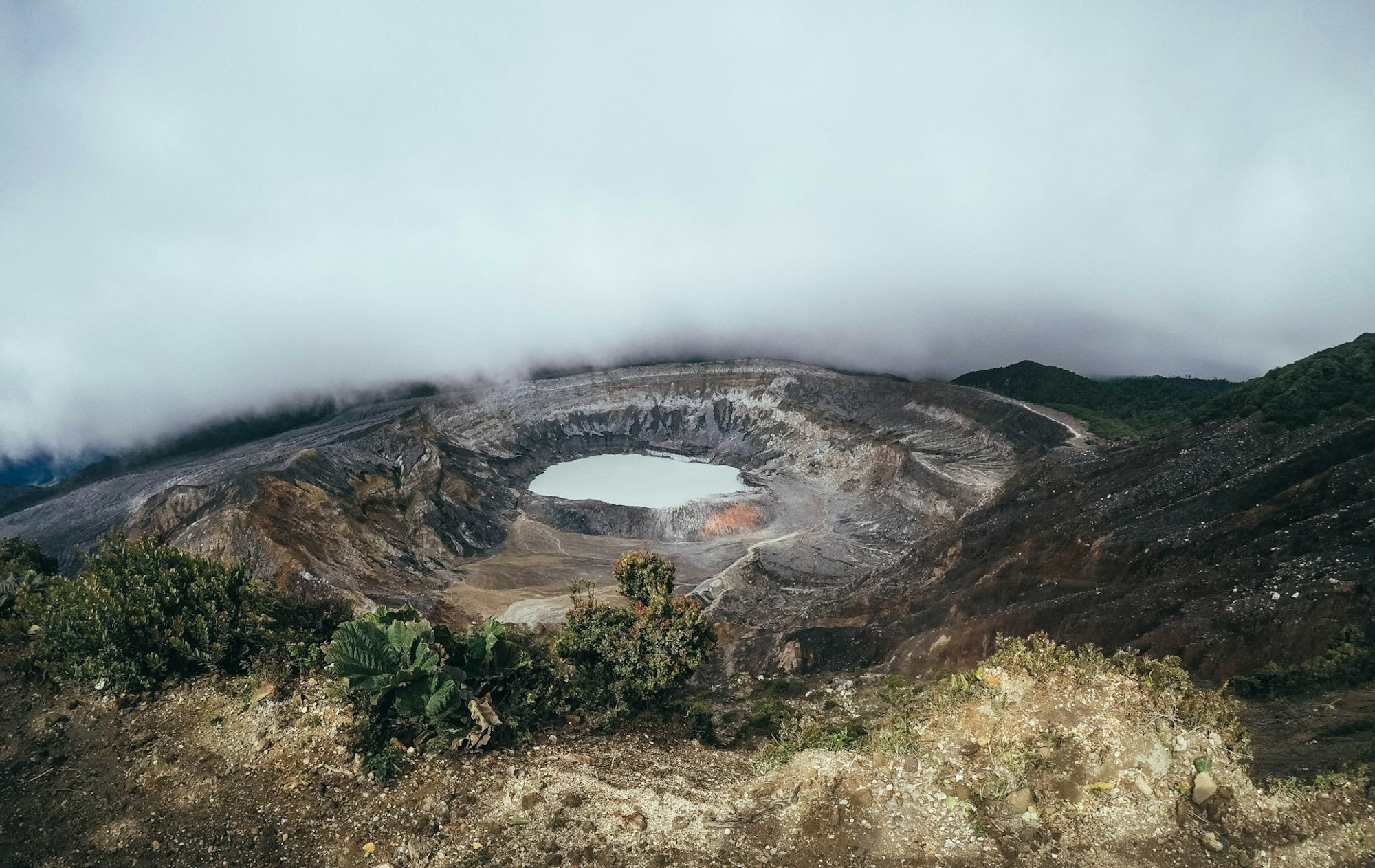
Poás Volcano National Park, Costa Rica
By Aaron Bailey · Last updated
Poás Volcano National Park surrounds one of the world's largest active craters, a steaming kilometer-wide bowl with a turquoise acid lake. It's an easy half-day from San José when conditions allow entry.
Top attractions & tours
The headline is the main crater itself — roughly 1.3 km across, walls dropping 300 meters to a churning acid lake that vents sulfur in plumes you can hear. The paved Sendero Crater (Sombrilla del Pobre) leads to the viewing platform; helmets are issued at the gate and visits are capped at short shifts when the volcano is restless.
The 1.4 km Sendero Botos climbs through stunted cloud forest to Laguna Botos, a cold green crater lake in a dormant cone — a complete contrast to the active pit below. The shorter Sendero Escalonia loops through gnarled, moss-draped forest back to the visitor center and is the best chance at hummingbirds, quetzals and the volcano's odd dwarfed vegetation.
Pair the park with La Paz Waterfall Gardens for five tiered falls, sloths and toucans, and Doka Estate for a coffee tour on the volcano's southern slopes. Combo day tours from San José hit all three; the colonial town of Alajuela makes a logical lunch or overnight stop on the way back.
Local picks
On the road up from Alajuela, Freddo Fresas in Fraijanes is the classic strawberry-country stop — strawberry batidos, casados, and a packed weekend dining room. A few kilometers higher in Poasito, Restaurante Chubascos does big plates of trout and Tico classics in a cool mountain garden.
For a more leisurely visit, Poas Volcano Lodge in Vara Blanca is a converted dairy farm with stone fireplaces and pasture views — a good base for an early-morning park entry. The higher-end Peace Lodge on the La Paz Waterfall Gardens property has cloud-forest cabins with stone soaking tubs.
Back down in Alajuela, the Central Market is the cheap-and-cheerful pick for casados, gallo pinto and fresh juices. The town of Grecia, 30 minutes west, has a candy-red metal church and easy access to Sarchí, the country's traditional oxcart-painting town.
Weather & climate
The summit sits around 2,700 m (8,800 ft), so it is far cooler than the Central Valley. Expect daytime highs in the mid-50s to low 60s°F and nights that can dip near freezing in the dry months. Bring a rain shell, fleece and long pants no matter the season.
Mornings are usually the clearest window — clouds and fog typically swallow the crater by 10 or 11 AM. The driest months are January through April; the wettest are September and October, when the park can be socked in all day.
Annual rainfall on the upper slopes runs over 3,500 mm, and wind chill at the rim is real. Even on a 'clear' day, the volcanic gas plume can sting eyes and lungs — the mandatory helmets are partly for falling rock, partly for shelter from sudden gas surges.
Monthly climate
Safety considerations
Poás is an actively erupting volcano. The 2017 phreatic eruption closed the park for over a year, and activity has flared again as recently as 2026. SINAC issues mandatory helmets at the gate, caps viewing time at the crater (often 20 minutes), and can close trails or the entire park on short notice. Check current status before you drive up.
Beyond the gas, the main risks are weather-driven: the road from Poasito climbs through fog and rain, and the rim is cold, wet and windy enough to bring on hypothermia in shorts and a t-shirt. People with asthma, pregnant visitors and small children should think twice when sulfur dioxide levels are elevated.
Getting around
Every visitor must reserve and pay in advance through SINAC — there is no ticket window at the gate. Slots are limited and weekends in dry season can sell out a week or more ahead. From SJO/San José the park is roughly 90 minutes by car via Alajuela and Poasito; a rental car gives you the freedom to arrive at the 8 AM opening before the clouds.
If you'd rather not drive the steep mountain road, daily combo shuttle tours from San José and airport-area hotels bundle Poás with Doka Estate and La Paz Waterfall Gardens for around $100–150 including entries, breakfast and lunch. Operators handle the SINAC reservation for you, which is worth a lot during eruption-related restrictions.
When to visit
Aim for the first slot of the day, December through April. Crater clarity is essentially a morning game; by late morning, even in the dry season, cloud usually fills the bowl. February and March are statistically the driest and clearest weeks.
Always check the volcano's current alert status with OVSICORI or SINAC before locking in non-refundable hotels nearby — Poás has a long history of unexpected closures, and a green or yellow alert can mean shortened visits, closed trails (the Botos lagoon trail has been closed during recent activity), or full shutdowns.