Tortuguero National Park, Costa Rica
By Aaron Bailey · Last updated
Tortuguero is a roadless maze of jungle canals on the Caribbean coast, protecting the most important green sea turtle nesting beach in the western hemisphere. You arrive by boat or small plane and explore from a kayak or panga.
Top attractions & tours
The headline experience is a turtle nesting tour on the park beach, run only with a licensed local guide and a ranger-issued permit. Green turtles are the main event with a July–October peak, while the much rarer leatherbacks come ashore February–April. Tours run after dark in small groups, no flashlights or cameras allowed.
A dawn canal tour by panga or kayak is the other essential outing — silent water threading through flooded forest, with caimans, river otters, three monkey species, sloths, and dozens of herons and kingfishers. The park's aquatic trails (Caño Chiquero, Caño Mora, Caño Harold) are the most wildlife-rich and require a guide and park entry.
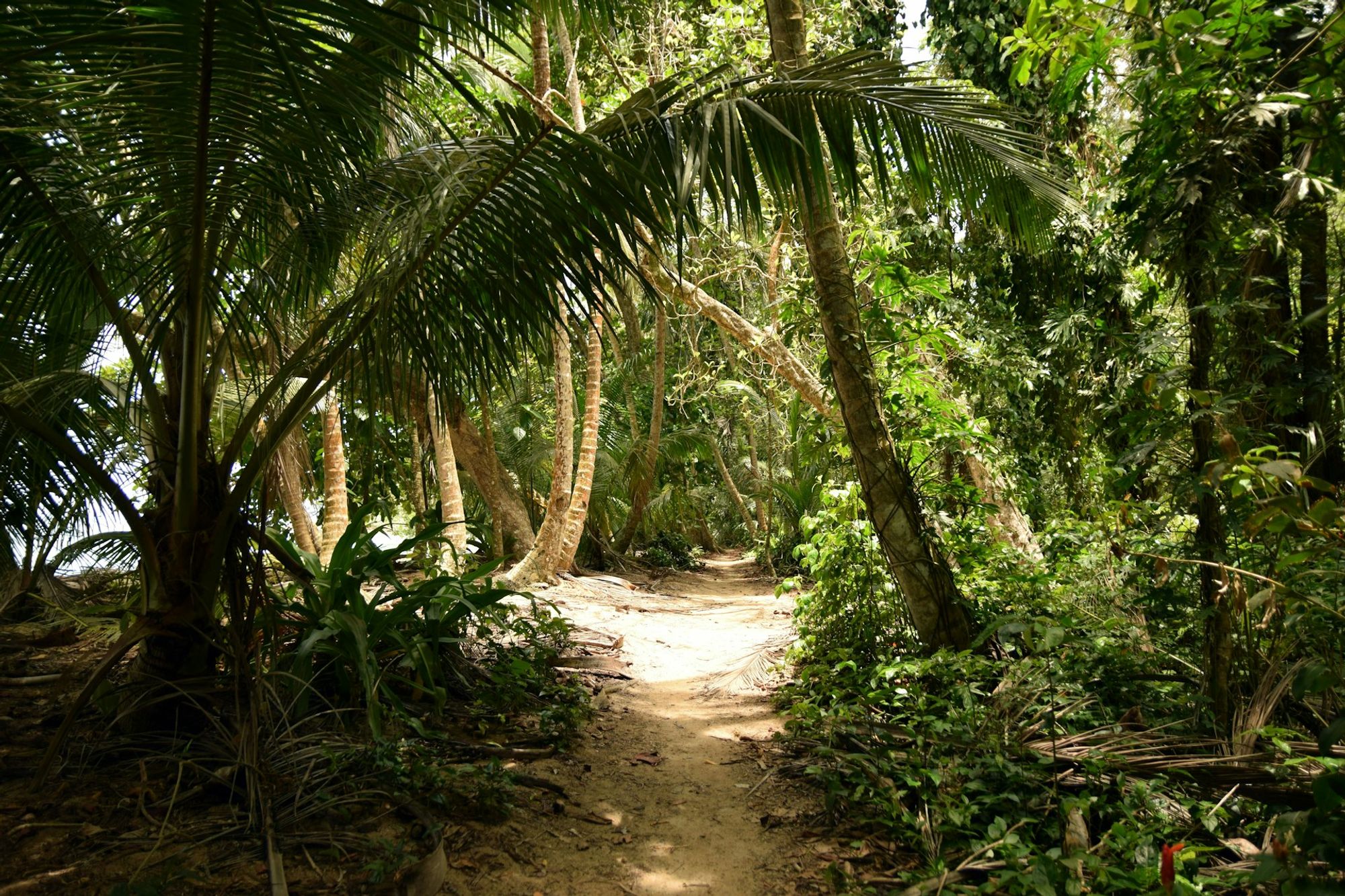
On foot, the short Sendero Gavilán leaves from the Cuatro Esquinas ranger station and loops about 2 km through coastal jungle. Just north of the village, Cerro Tortuguero climbs roughly 400 steps to a 119-meter viewpoint over the canals, the rainforest, and the Caribbean — the only real high ground for hundreds of kilometers.
Local picks
Miss Junie's has been serving Caribbean rice-and-beans, coconut-stewed chicken, and fresh fish in Tortuguero village for decades and is the most famous kitchen in town. Budda Cafe sits right on the canal with wood-fired pizza, fresh juices, and the best riverfront tables for sunset.
Soda Doña María is the cheap, no-frills local pick for casados and gallo pinto. Wild Ginger runs a small, frequently changing fusion menu that is a welcome break from the lodge buffets.
The big jungle lodges across the canal — Mawamba Lodge, Pachira Lodge, Laguna Lodge, Manatus Hotel, and Tortuga Lodge & Gardens — are all-inclusive packages with their own boats, guides, and meals, and they are the easiest way to do Tortuguero without juggling logistics. Village guesthouses are far cheaper if you book guides à la carte.
Weather & climate
Tortuguero is hot, humid, and wet year-round. Daytime highs sit in the mid-80s°F and nights barely drop below the low 70s. The water is warm and the air feels heavier than the Pacific side.
Unlike the rest of Costa Rica, the Caribbean coast does not have a true dry season. The traditionally drier windows are a short stretch in February–March and a less-reliable mini-dry spell in September–October.
Annual rainfall is enormous — roughly 140 to 200 inches depending on the year — and it falls in heavy bursts rather than all-day drizzle. Expect to get wet on a canal tour even in the driest months.
Monthly climate
Safety considerations
Do not swim in the canals or the river mouths — they are home to American crocodiles and spectacled caimans, and the currents are unpredictable. The ocean side of the park has strong rip currents and bull sharks have been documented offshore; the beach is for walking and turtle-watching, not bathing.
Mosquitoes and sand flies are constant from dusk onward, so bring DEET and long sleeves. The village itself is small and friendly, but armed robberies have been reported on the La Pavona road approach; travel with a reputable shuttle in daylight and do not leave bags visible in parked cars.
Getting around
There are no roads into Tortuguero. Most visitors drive or shuttle 3–4 hours from San José to the La Pavona dock, then take a 1–1.5 hour public boat downriver to the village (around $5–10 each way). The faster option is a 30–35 minute Sansa flight from SJO to the TTQ airstrip north of town, followed by a short boat hop to the village dock.
The village is car-free and tiny — you can walk end to end in 15 minutes on a single sand path. To enter the national park canals or the beach trails you need a ticketed boat tour or a kayak from one of the village operators; lodges across the canal run their own shuttle launches on a fixed schedule.
When to visit
July through October is the best window if seeing a green turtle haul out and nest is your priority — August is peak. Expect heavy rain on the same trip; the canals are beautiful in any weather and wildlife stays active regardless.
February and March are the driest, warmest stretch and the best time for canal photography and birding without a constant soaking. February–April also overlaps with the rare leatherback nesting season if you want a shot at the world's largest sea turtle.