Cell Phone Coverage in Costa Rica: eSIMs, SIM Cards, and What Actually Works
What it takes to stay connected in Costa Rica: international eSIM vs. local SIM, where to buy, and coverage realities.
By Aaron Bailey · Published
The Airalo eSIM I’d loaded onto my phone an hour before leaving the U.S. worked fine in line at customs and went dark twenty minutes later when the road south from SJO bent around a mountain. I’d been in Costa Rica for under an hour and was already learning what would become a recurring lesson over the next five years: cell coverage here is hyperlocal, carrier choice matters more than you’d expect, and the simplest way out is usually a Claro SIM from the airport kiosk before you even leave the terminal.
Most tourist guides flatten this question into “Costa Rica has good cell coverage” or “buy a SIM card.” Both are technically true and not very useful. The real picture: there are three main carriers, three different ways to get on a network, and a half-dozen specific places where nobody’s network reaches. If you understand the trade-offs you can pick the right option in five minutes. If you don’t, you end up either paying triple for a tourist eSIM that drops you in the mountains, or standing at a Claro kiosk with no idea what plan to ask for.
Here’s how it actually works.
The Three Carriers
Three networks dominate the Costa Rican mobile market:
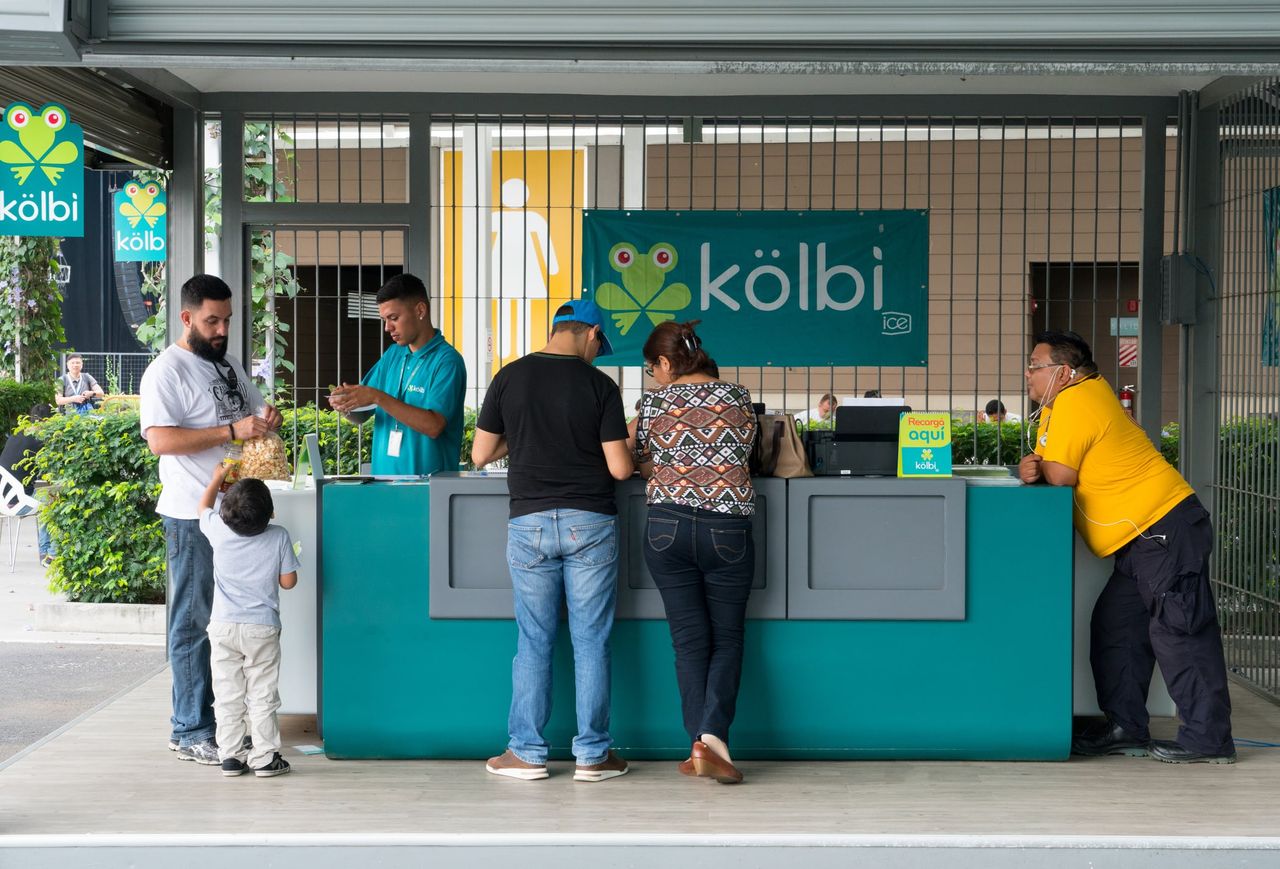
- Kölbi — the consumer brand of ICE, the state-owned electricity and telecom utility. Decades of monopoly status before the market opened in 2011 mean Kölbi’s coverage map is the broadest, especially in remote rural areas. It’s a touch slower than the others in the cities, and its kiosks are sometimes the most chaotic. Most locals are on Kölbi.
- Claro — the Mexican-owned carrier (parent: América Móvil). They’ve built out aggressively in tourist corridors and cities; coverage is competitive with Kölbi where most travelers go, and the speeds are noticeably better. Their airport kiosks run smoothly, with English-speaking staff and tourist-specific data packages priced for short trips.
- Liberty — formerly Movistar (Telefónica) before the 2021 acquisition; you’ll still see the old Movistar branding on some signage and SIM packaging. Decent in cities, weaker in the rural spots Kölbi dominates. I’d skip Liberty for a tourist trip unless you walk into a particularly good kiosk deal.
Three Ways to Get Connected
You have three real options for staying connected during a Costa Rica trip. Each has its place.
1. International eSIM (Airalo, Holafly, Nomad)
Buy an eSIM online a day or two before your trip, scan a QR code, and you’re on a Costa Rican network the moment your plane lands. Most apps default to one of the local carriers (Airalo’s Costa Rica plan currently rides on Kölbi, though that can change without notice).
Cost: Around $8 for 1 GB / 7 days up to $30 for 10 GB / 30 days on Airalo. Holafly’s unlimited-data plans start around $35 for 5 days and $60 for 15 days.
Pros:
- Set up before you arrive, working from the moment you land
- No airport queue, no passport scan, no Spanish kiosk conversation
- Easy if you’re hopping between several countries on the same trip
Cons:
- No local phone number. This is the big one. Costa Rican Uber, inDrive, banking apps, hotel reservations, and some delivery services send SMS verification codes to a Costa Rican-prefixed number. eSIMs almost never give you one.
- Per-GB cost is typically 2–3x what a local SIM runs
- If something breaks, support is over chat with a company that isn’t in the country
- Not every phone supports eSIM — older devices, some dual-SIM Android variants, and certain carrier-locked phones can’t use them
When it makes sense: Short trips (under a week), travelers who want zero hassle on day one, multi-country trips where Costa Rica is one stop of several.
2. Local eSIM (Claro, Kölbi)
Both Claro and Kölbi now sell eSIM-compatible prepaid plans. Cheaper than international eSIMs and you get a local phone number, but the activation flow has more friction — you’ll typically still need to visit a kiosk or store to scan your passport before the eSIM provisions on the network.
Cost: Roughly the same as a physical SIM — $10 to $20 for a starter package with several gigabytes.
Pros vs. international eSIM: Local phone number, cheaper data, works with every Costa Rican service. Cons vs. physical SIM: Activation isn’t always instant — sometimes you wait at the kiosk for the network to provision the line. Phone needs eSIM support.
When it makes sense: Travelers with eSIM-capable phones planning a longer trip who want a local number but don’t want to deal with a physical chip.
3. Physical SIM Card (Most Common)
The traditional path. You walk into a Claro or Kölbi kiosk, hand them your passport, they hand you a SIM and a small printed receipt with your new phone number. Activation is usually instant. You pop the SIM in, register on the network, and you’re on.
Cost: $10 to $25 for the SIM plus an initial data package, depending on how many gigabytes you load.
Pros:
- Cheapest per GB
- Local phone number — works with every Costa Rican service
- Instant activation in 95% of cases
- Easy to top up at any pulpería, supermarket, or pharmacy
Cons:
- Requires removing your home SIM if your phone is single-SIM
- Five-minute Spanish-leaning kiosk interaction (airport kiosks have English speakers; small-town stores often don’t)
When it makes sense: Most travelers, most trips, and especially anyone staying longer than a week.
My Recommendation: Just Buy a Claro SIM at the Airport
For most travelers, the path of least friction is the one I send my friends down: walk out of customs, find the Claro booth in arrivals, ask for the prepaid tourist plan, hand them your passport, pay around $15–20, and walk out with a SIM card and a Costa Rican phone number.
Why Claro over Kölbi for tourists specifically:
- The kiosk experience is smoother. Claro has put the work into making their airport booths friendly to non-Spanish-speaking visitors. Kölbi’s airport presence has improved but still feels more like a government utility counter.
- Pre-built tourist packages bundle the SIM with 5–15 GB of data into one fixed price — no menu of confusing add-ons.
- Coverage is great everywhere most tourists actually go. Beach towns from Tamarindo to Puerto Viejo, all the major mountain destinations (La Fortuna, Monteverde), Manuel Antonio, the Central Valley. The places where Kölbi has a real coverage edge are mostly deep wilderness — Corcovado’s interior, the southern Talamanca mountains, certain Guanacaste back roads.
- The data is faster. Claro’s 4G LTE in the cities and on the Inter-American Highway is consistently snappier than Kölbi’s.
If your trip is going deep into the Osa Peninsula or Talamanca’s remote stretches, Kölbi is worth a look — its rural coverage is genuinely better there. For everyone else, Claro is the simple answer.
Where to Buy
At the airport. Both SJO (Juan Santamaría) and LIR (Daniel Oduber) have Claro and Kölbi kiosks in the arrivals area, after customs but before you walk out to the curb. They’re open during all flight arrival hours. This is the easiest place to buy. Get it before you leave the terminal.
At a Claro or Kölbi store. Found in every major town and most malls. They handle SIMs, top-ups, and customer service. Stores in tourist corridors usually have at least one English speaker; small-town stores may not.
At supermarkets and convenience stores. Más x Menos and Auto Mercado often have a SIM/electronics counter. Some pulperías (corner stores) sell them too, though they’re inconsistent on which plans they stock.
For top-ups specifically (recargas): any pulpería, supermarket cash register, gas station, or pharmacy. You ask for a “recarga de [carrier] por [amount in colones],” they take cash, your phone gets credited within seconds. It’s a daily-life skill in Costa Rica that takes about thirty seconds to learn.
What you need to bring: your passport. SIM purchases are regulated and carriers are required to register your line against an ID. Tourists use their passport. This is non-negotiable — they will not sell you a SIM without it.
Where the Signal Drops
Costa Rica is small, mountainous, and crisscrossed by gorges that block radio. A few places where every carrier struggles:
- The drive from SJO to La Fortuna, especially the stretch between Naranjo and San Carlos and again on the descent into La Fortuna. Expect 10–15 minute dead zones.
- Route 32 (the Caribbean highway) through the Zurquí pass — gorgeous drive, almost no signal for 20–30 minutes.
- Most of Corcovado National Park and the dirt roads leading to Drake Bay and Carate. Bring satellite or accept you’re off the grid.
- The interior of the Osa Peninsula generally.
- The mountain road to Monteverde (Route 606) has improving but inconsistent coverage, particularly on the climb.
- Beach towns at the end of long dirt roads — parts of Santa Teresa past the main strip, Cabo Matapalo, Punta Uva and Manzanillo from Puerto Viejo.
In each of these, Kölbi tends to fail last and recover first. Claro is close behind. Liberty usually drops earliest.
For navigation, download Google Maps offline tiles for the regions you’ll cover before you leave WiFi. Waze caches less reliably. The driving in Costa Rica guide has more on this.
WhatsApp, WiFi Calling, and What You Actually Need
A reality check before you over-spec your data plan: most of what you use a phone for in Costa Rica happens over WiFi.
WhatsApp is the dominant messaging app here. Restaurants, hotels, tour operators, shuttle companies, even some doctors take WhatsApp messages by default. Install it before you come and use it instead of SMS.
WiFi at hotels and Airbnbs is near-universal. Even rustic eco-lodges deep in the jungle have WiFi at the main lodge, even if the cabin doesn’t. You can do most of your messaging, calling, and trip planning while connected to WiFi for free.
WiFi calling to your home country via WhatsApp, FaceTime, Google Voice, or similar just works. International rates are not a real concern in 2026.
What you actually need cell data for, in practice:
- Maps and navigation while driving
- Uber or inDrive in Uber-friendly cities
- SMS verification codes (which need a local number, hence the local SIM)
- The 30 minutes between leaving WiFi at one place and arriving at WiFi at the next
For most travelers, 5 GB of data is plenty for a 1–2 week trip. Bump to 10 GB if you’re driving a lot or streaming music in the car.
Final Tips
Buy at the airport, not after. The kiosks at SJO and LIR are the easiest place to start. In-town stores are fine but you’re already moving by then — get connected before you leave the terminal.
Tell them how long you’re staying. Tourist plans are time-bound (7, 15, or 30 days typical). Asking for the “tourist package for two weeks” gets you the right product.
Save your phone number. Take a screenshot of the receipt. If you’re using your new number with banks, Uber, or apps, you’ll want to reference it.
Don’t bother with a local plan for trips under 4 days. Use international roaming or an eSIM. The kiosk visit isn’t worth it for that little time.
Activate roaming on your home SIM as a backup, especially if your plan includes free or cheap international data (T-Mobile, Google Fi, and similar). Even 100 MB of fallback roaming has saved me from being completely offline a few times.
Keep your home SIM somewhere safe. Don’t lose it in the bottom of a suitcase. The little plastic holder it came in is the right place.
Five years in, I still keep a Claro SIM in my phone for every trip out into the country, even though I have a Kölbi line for daily life here. The redundancy has saved me more than once on roads where one network was dead and the other had two bars. For visitors, the simpler path is the right one: a Claro tourist SIM, bought in fifteen minutes at the airport, gets you connected for the entire trip without any of the eSIM caveats that surprise you when an app fails to verify a phone number.
Pura vida and stay connected.
About the Author
Aaron Bailey
Hey, I'm Aaron and I've been living in Costa Rica 5 years and visiting much longer than that. I've traveled all over this country by car, plane and shuttle and I'm here to help you plan the best trip to Costa Rica.
Read more about Aaron