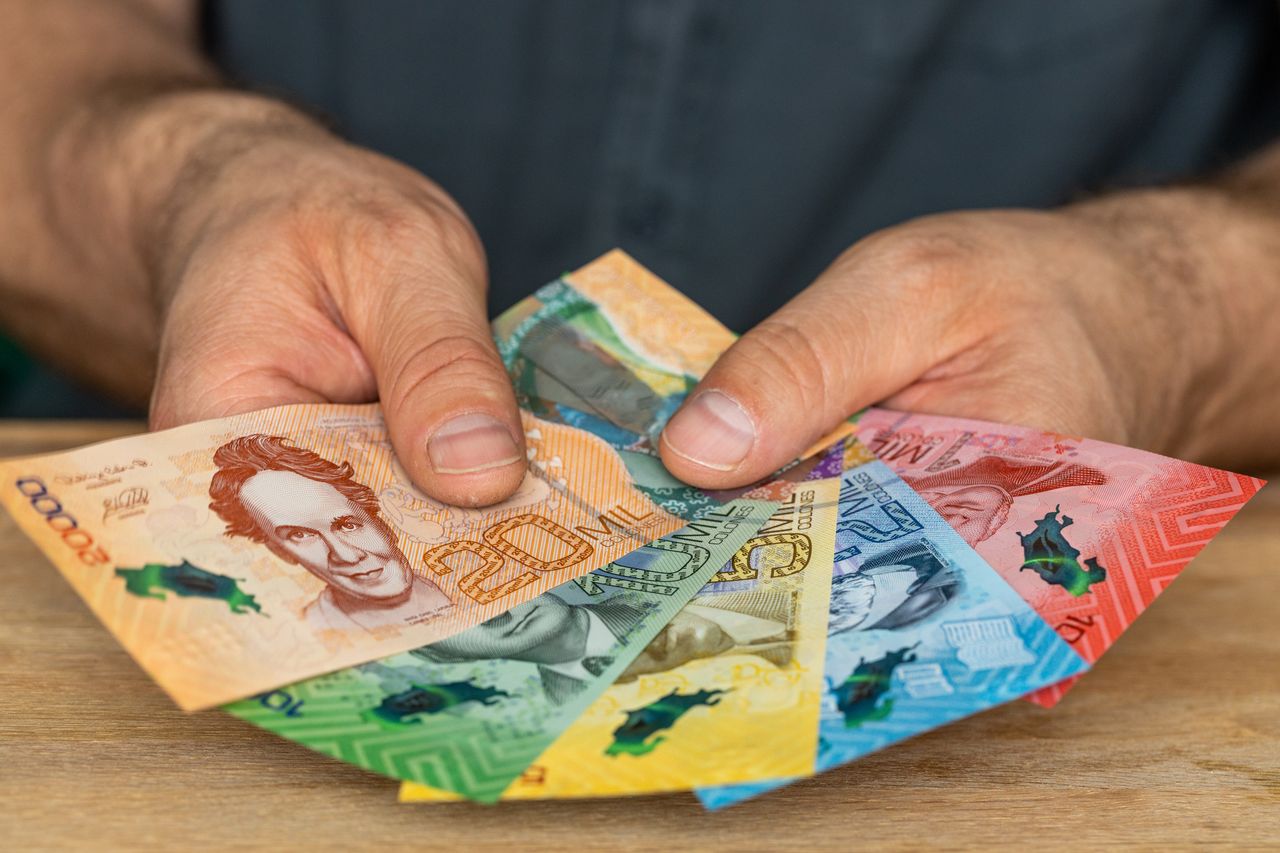
Money in Costa Rica: Colones, Dollars, Cards, and ATMs
How to actually pay for things in Costa Rica: USD vs colones, where each works, ATM fees, card pitfalls, and how much to tip.
By Aaron Bailey · Published
The first time I tried to pay for a casado at a soda in Quepos with a $20 bill, the woman at the register laughed, gestured at her cash drawer of mostly colones, and said something I now know meant “you’re going to be very disappointed by the change I have to give you.” She made the math work. She gave me back about $11 worth of colones at an exchange rate that was probably 8% worse than the bank’s. The casado was fine but the lesson wasn’t free.
Costa Rica runs on two currencies that don’t quite agree on which one is the real one. The colón is the national currency; the dollar is the tourist currency. Whether to pay in which, when to use cards, and how to get cash without burning $20 in fees on every visit — none of it is obvious from the outside, and most travel blogs gloss right past it. After five years of paying for daily life here, here’s what actually works.
The Two-Currency Reality
The Costa Rican colón (CRC) is the national currency. The exchange rate moves around but tends to sit in the 450 to 550 colones to the dollar range. Locals price everything in colones; menus, gas stations, supermarkets, government fees, all in colones.
Tourist-facing businesses — hotels, tour operators, restaurants in tourist corridors, surf shops, dive operators — almost always price in U.S. dollars and accept either currency. They display dollar prices because their customers think in dollars and they want to remove the math friction. The exchange rate they offer when you pay in dollars and they give change in colones is usually worse than what the bank would give you by 5–10%.
The practical takeaway: at a beachfront restaurant in Tamarindo, paying with a card or in dollars is fine. At a soda in San Carlos, paying in colones is faster, cheaper, and expected.
Where USD Actually Works
You can pay in dollars at:
- Most hotels (and your bill is often quoted in dollars to begin with)
- Most tour operators (zip-lining, rafting, catamaran trips, guides)
- Restaurants in tourist hubs (Tamarindo, Manuel Antonio, La Fortuna, Monteverde, Jaco, Puerto Viejo)
- Surf shops and dive shops
- Anyone selling primarily to tourists
You cannot reliably pay in dollars at:
- Sodas (small Tico restaurants)
- Pulperías (corner stores)
- Public transport (buses, public taxis)
- Gas stations (some accept it, most prefer colones)
- Farmers markets
- Smaller bakeries, butcher shops, hardware stores
- Government fees (national parks, vehicle registration, fines)
- Anywhere off the tourist corridor
Bills accepted: $1, $5, $10, $20, sometimes $50, almost never $100. New, crisp bills are far more likely to be accepted. A torn or worn $20 will get refused. This is a real thing — banks here are strict about USD condition and businesses pass that strictness along.
Coins and pennies are not accepted.
ATMs and Getting Colones
Costa Rica has plenty of ATMs. The common networks:
- Banco Nacional (BN) — government-owned, lots of branches, no transaction fee on US debit cards!
- Banco de Costa Rica (BCR) — similar to BN.
- BAC Credomatic — widely available; my preferred network. Generally lower fees and reliable for foreign cards.
- Davi Bank — fewer ATMs, but works with foreign cards and partners with some U.S. networks for fee-free withdrawals.
- Banco Popular, Promerica — fine.
You’ll find ATMs at:
- Both major airports (SJO and LIR)
- Inside every supermarket of any size
- At gas stations (Servicentros) on major highways
- In every town’s central plaza area, often inside the bank’s lobby
- At resort hotels (sometimes; usually with worse fees)
Fees: Foreign-card ATM withdrawals typically cost $3 to $7 at the Costa Rican bank, plus whatever your home bank charges. Banco Nacional and Banco de Costa Rica charge no fees for US debit cards.
Per-withdrawal limits: Usually around $400 worth of colones (often capped at 200,000 colones per transaction by the local bank, regardless of your home bank’s limit). If you need more, do two withdrawals.
A practical rhythm: withdraw colones once or twice during your trip, in $300–400 chunks, at a BAC ATM. Use those colones for small purchases, parking, sodas, taxis, and farmers markets. Use a card for everything else.
Use the daytime, indoor ATMs. Costa Rica is generally safe, but ATM scams (skimmers, distraction theft) target outdoor street ATMs, especially at night. Inside a bank lobby or supermarket is fine.
Cards: Where They Work and the One Trap to Avoid
Visa and Mastercard work almost everywhere that’s set up to take cards. American Express works less reliably. Discover is rare.
Where cards work well:
- Hotels, large restaurants, gas stations
- Supermarkets, pharmacies, mall stores
- Tour operators (most)
- Uber and inDrive
Where you’ll need cash:
- Sodas and small family restaurants
- Pulperías
- Roadside fruit stands
- Farmers markets
- Smaller bakeries
- Tipping
- Parking attendants (“guachis”)
- The occasional tour operator that’s “card machine is broken today”
The one trap to avoid: when you hand over your card, the terminal will sometimes ask whether you want to be charged in colones (CRC) or your home currency (USD/EUR). Always pick colones. Picking your home currency triggers “Dynamic Currency Conversion” — the merchant’s bank does the conversion at a rate roughly 4–7% worse than your card’s network rate, plus a markup. Always, always pick the local currency. Your bank’s conversion is virtually always better.
Foreign transaction fees are on your home card, not the merchant. If your card charges 3% on foreign transactions, that adds up. A no-foreign-fee card (Capital One, Chase Sapphire Preferred, Schwab debit, etc.) will pay for itself in a single trip.
Tipping in Costa Rica
This is the question I get asked most. The honest answer is that Costa Rica is more lightly-tipped than the U.S., and most service tips are already built into the price.
Restaurants: A 10% service charge (“servicio”) is automatically added to the bill, by law. Look for “10% servicio” on the receipt. You don’t tip on top of that for normal service. For genuinely great service at a sit-down place, an extra 5% in cash is appreciated but not expected. At sodas and casual spots, no extra tip.
Shuttle drivers: $5 to $10 per ride for a shared shuttle, more for a private. Cash, given at drop-off. (More on taking a shuttle.)
Tour guides: $10 to $20 per person per day for a guided tour. More for a multi-day trip or private guide.
Taxi / Uber drivers: Tips not standard. Rounding up to the nearest 1,000 colones or 100 colones is fine. No tip is also fine.
Hotel housekeeping: $1 to $2 per night, in cash, left in the room when you check out (or daily, on the pillow).
Hotel concierge / bellhop: A few hundred colones to $1–2 for help with bags or a meaningful concierge favor.
Parking attendants (“guachis”): Costa Rica has informal parking attendants in tourist areas — guys in vests who watch your car for tips. 500 colones (~$1) when you leave is standard. They earn it; they actually keep an eye on the car.
Tour drivers, guides on activities, bartenders: A few thousand colones at the end of a tour, $1–2 per drink at a bar, not standard at a soda.
The general principle: tipping is appreciated, never expected, and the staff are not relying on tips to make a living the way they do in the U.S. Restaurants pay an actual wage. The 10% service charge is genuinely the tip. Don’t double-tip out of guilt.
A Few Specific Tips
Carry small denominations. A wallet full of crisp $20s and $100s is hard to spend. $1, $5, and $10 bills get used. Same with colones — a 20,000 (~$40) bill can stump a small place. Get smaller stuff at the ATM by withdrawing in odd amounts.
Save your ATM receipt. If a withdrawal gets declined or short, the receipt helps your bank investigate. Most ATMs print one on request.
The biggest banks have the longest hours but they’re not 24-hour. Most close at 4 PM weekdays, noon Saturdays. If you need a teller (rare for tourists), plan ahead. ATMs run 24/7.
SINPE Móvil is for residents. Costa Rica has a fast peer-to-peer payment system locals use constantly — it works between Costa Rican bank accounts via phone number. As a tourist, you can’t really use it. Stick to cards and cash.
The colón sign is ¢, not $. A price written “₡5,000” is 5,000 colones, about $10. Don’t panic at “₡25,000” on a menu thinking it’s $25,000.
Currency exchange counters are worse than ATMs. The ones at the airport, hotels, or “casa de cambio” booths in tourist towns offer worse rates than just withdrawing colones from an ATM. Skip them.
Tax-on-tax watchout: Many menu prices in tourist areas are listed before the 13% IVA (sales tax) and 10% service charge. The bottom of the receipt will reveal the actual total — sometimes 23% above the menu price. Look for ”+ IVA + servicio” in fine print.
What to Plan to Spend
Rough averages for a week, two adults, doing typical tourist things (excluding flights and lodging):
- Restaurant meals: $20–60 per meal at a tourist-area restaurant, $5–10 per person at a soda
- Coffee: $3–5 at a café, $1–2 at a soda
- A standard tour: $50–150 per person (zip-lining, rafting, guided park hikes)
- Gas: $4–5 per gallon
- Beer at a beach bar: $4–6 (Imperial); craft pours $6–9
- Bottled water (1.5L): $1–2 at a supermarket
- Souvenir from a market: $5–25
- Laundry: $5–15 per load at a lavandería
- Domestic flight: $80–130 one-way (Sansa) — see Flying in Costa Rica for what to expect
This isn’t an exhaustive list, but it’ll get you within a 20% margin of what to expect.
After enough trips you stop thinking about which currency to use — you just hand over whatever’s in your hand, and the math works itself out. But the first few times, the two-currency thing is genuinely confusing. The shortest version: get colones from a BAC ATM, use them for small stuff, use a card (in colones, not USD) for bigger stuff, and leave your $100 bills at home.
Pura vida and happy spending.

About the Author
Aaron Bailey
Hey, I'm Aaron and I've been living in Costa Rica 5 years and visiting much longer than that. I've traveled all over this country by car, plane and shuttle and I'm here to help you plan the best trip to Costa Rica.
Read more about Aaron